Game Accessibility · Qualitative Research
Accessibility for Non-disabled Players
• Game accessibility research typically focuses on players with disabilities, this study asked why non-disabled players use accessibility settings too. • Ran semi-structured interviews with 13 regular multiplayer gamers and analysed transcripts using Reflexive Thematic Analysis, landing on 4 core themes. • Found that competitive players treat accessibility settings as performance optimization, not accommodation; other players use them purely for physical comfort/fit; the same setting can help one player and harm another and that almost nobody discovered these settings inside the game itself. • Recommendations for developers are make settings discoverable in-game, reframe them as "tune your setup" rather than "accessibility," and let players adjust mid-session rather than through a menu that breaks flow.

Starting Point
Why do people who don't need accessibility settings use them anyway?
Accessibility features in video games are almost always studied through the lens of the people who need them. This project asked a different question: what about the players who don't?
"I would say that playing Call of Duty mobile game on default settings, it's like impossible. If you want to progress in the game." P2
The Gap
Game accessibility research has, understandably, focused on players with disabilities on how closed captions help deaf players, how remappable controls help players with limited mobility, how difficulty settings open games up to people who'd otherwise be locked out. That work matters and is far from finished.
But sitting inside that research, a smaller, stranger question kept surfacing: accessibility settings are used by plenty of players who don't have disabilities at all. We asked why, and what these players think they're doing when they change a setting that wasn't built with them in mind.
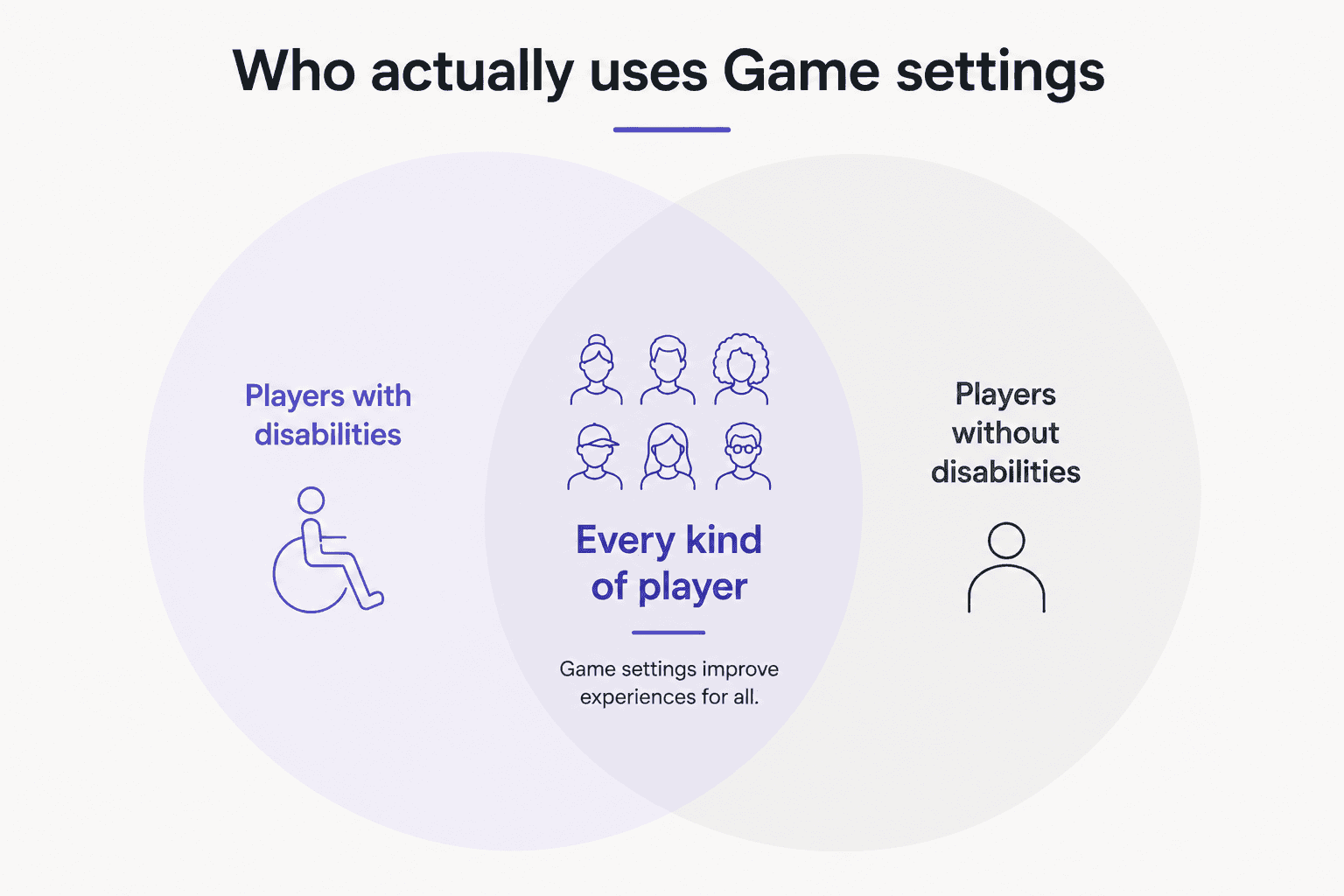
How do players without disabilities conceptualise and use accessibility features in multiplayer games?
The Question → The Method → Why
I needed to know why, and what happened when they didn't use game settings
I focused specifically on multiplayer games. Multiplayer spaces put settings under social pressure in a way single-player games don't. Players are customizing not just for themselves, but relative to other players, competitively or cooperatively. That felt like the more interesting site to look for motivation.
I needed to understand how non-disabled players actually use these settings and not just whether they do so I chose interviews over a survey. A survey would have told me what people changed. I needed to know why, and what happened when they didn't.
I ran semi-structured interviews, in person, in two parts: a short screening conversation to confirm someone was a genuine multiplayer player, followed by a deeper interview into what they changed and why. I started with 15 participants and screened two out during that first stage as they turned out to be single-player gamers, which didn't fit the study. The final set was 13 participants, all above 18, all fluent in English, all playing multiplayer games regularly.
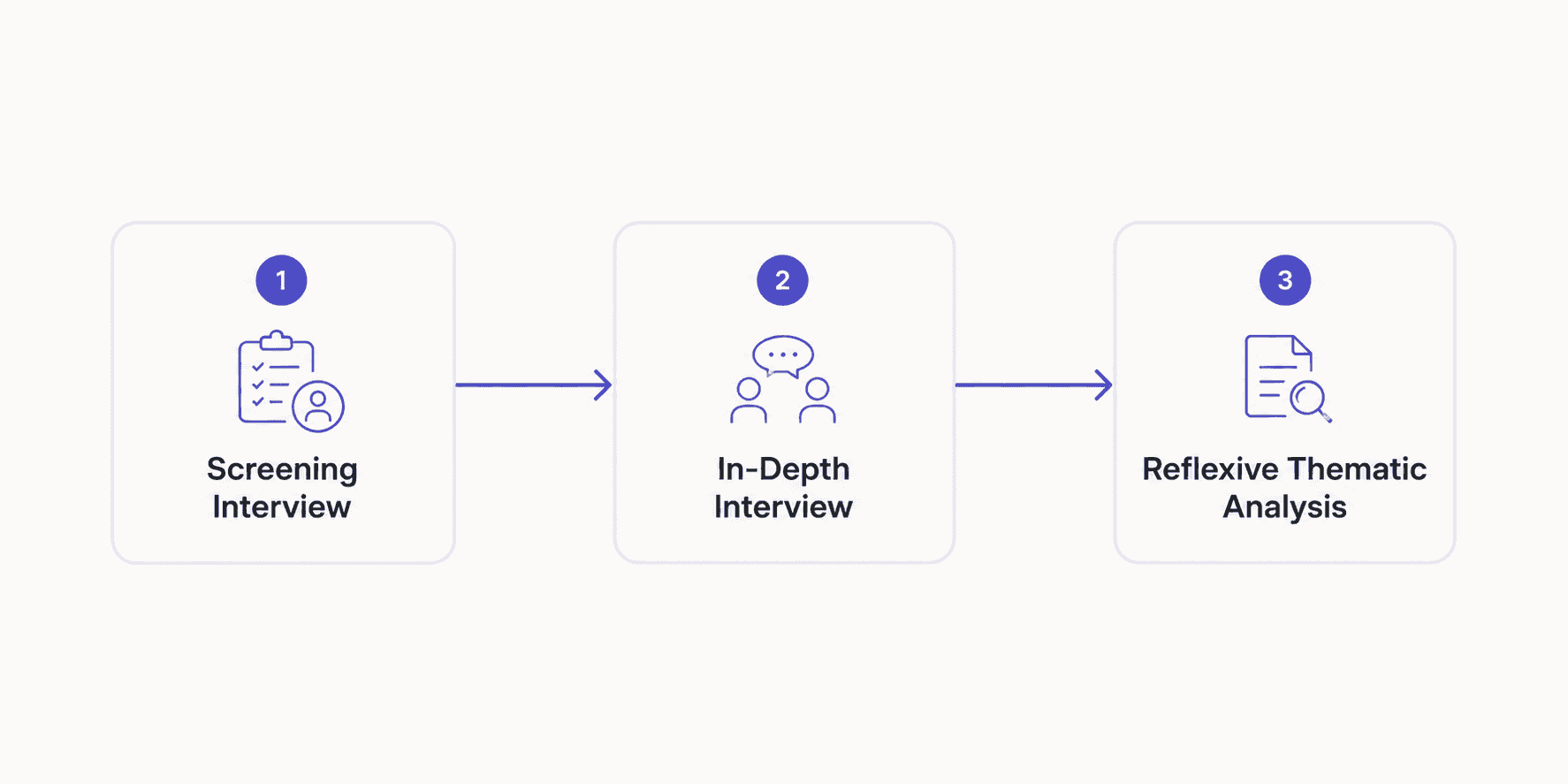
How I made sense of it
I coded every transcript manually, using Reflexive Thematic Analysis. I chose this over a more rigid coding framework because it treats the researcher's own perspective as part of the analysis and as a gamer myself, that felt like the more honest approach.

The process was iterative: open coding directly on the transcripts first, then clustering those codes into broader groups, then revising (several passes) cutting codes that didn't hold up and splitting one theme that turned out to be doing two jobs at once.
What I landed on was 4 themes, 4 subthemes:
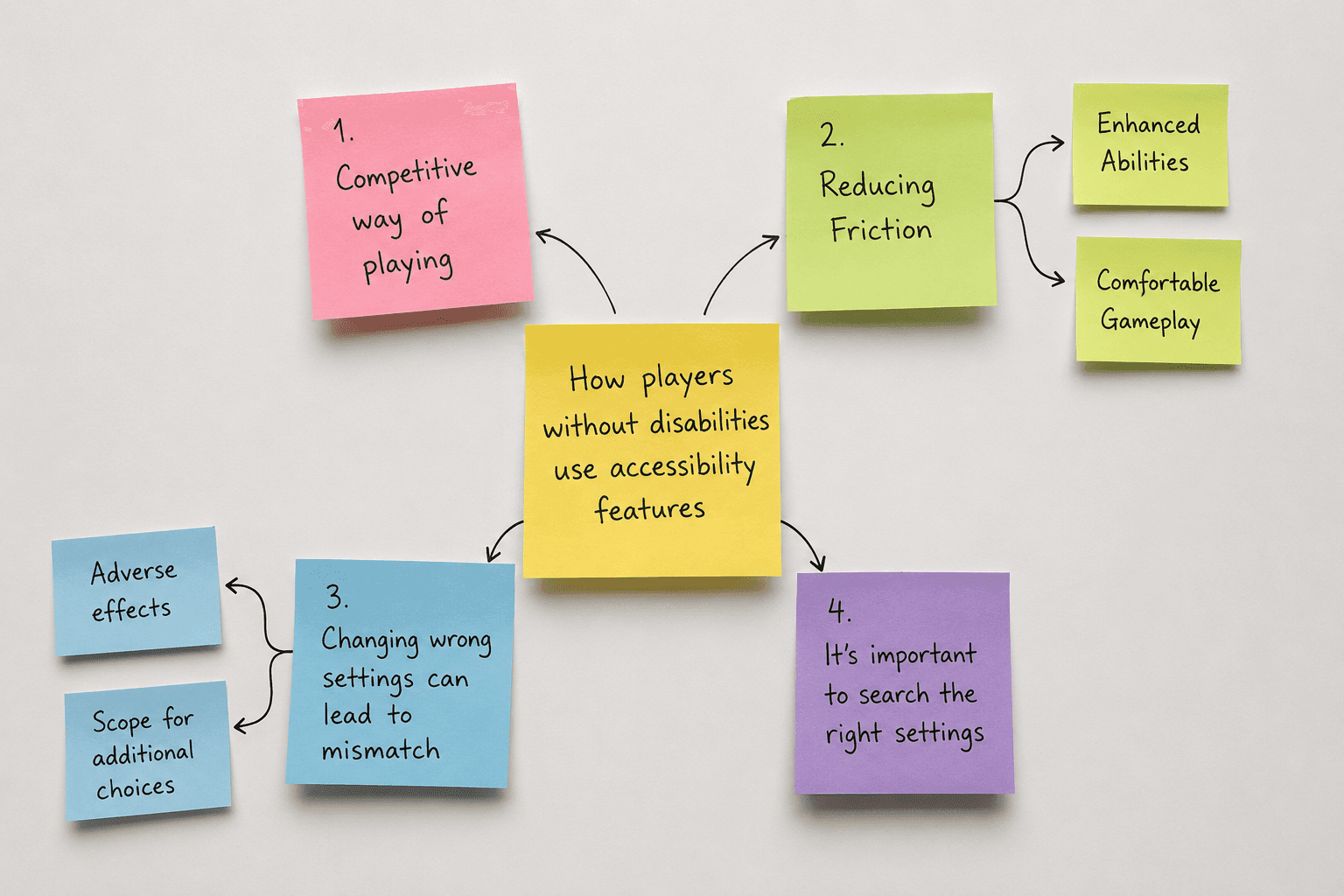
And 16 revised codes, mapped out visually to check the logic held together as a whole rather than as isolated fragments:
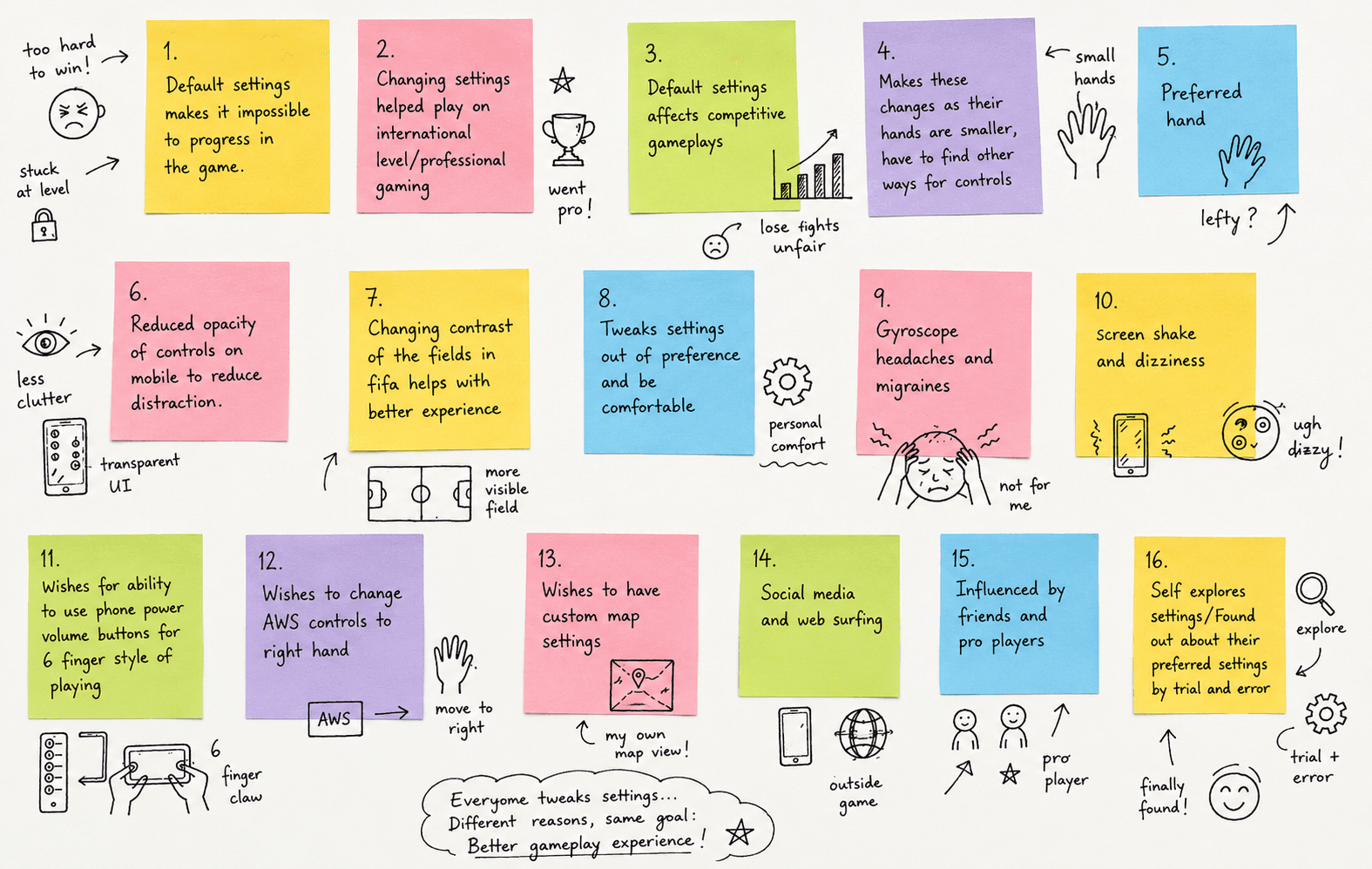
Proof of Process
What I Found
1. For competitive players, accessibility isn't accommodation
The players who took their games most seriously didn't think of settings changes as help. They saw the default settings as the actual obstacle, and customization as simply what competitive play requires.
"I play competitively. So I change a lot of settings that suit my style... Because a competitive player or a professional player would change almost all the settings to his or her preference." P5
One participant who competed internationally described specific setting changes for example: gyroscope controls, a customized controller as a direct performance advantage, not a convenience.
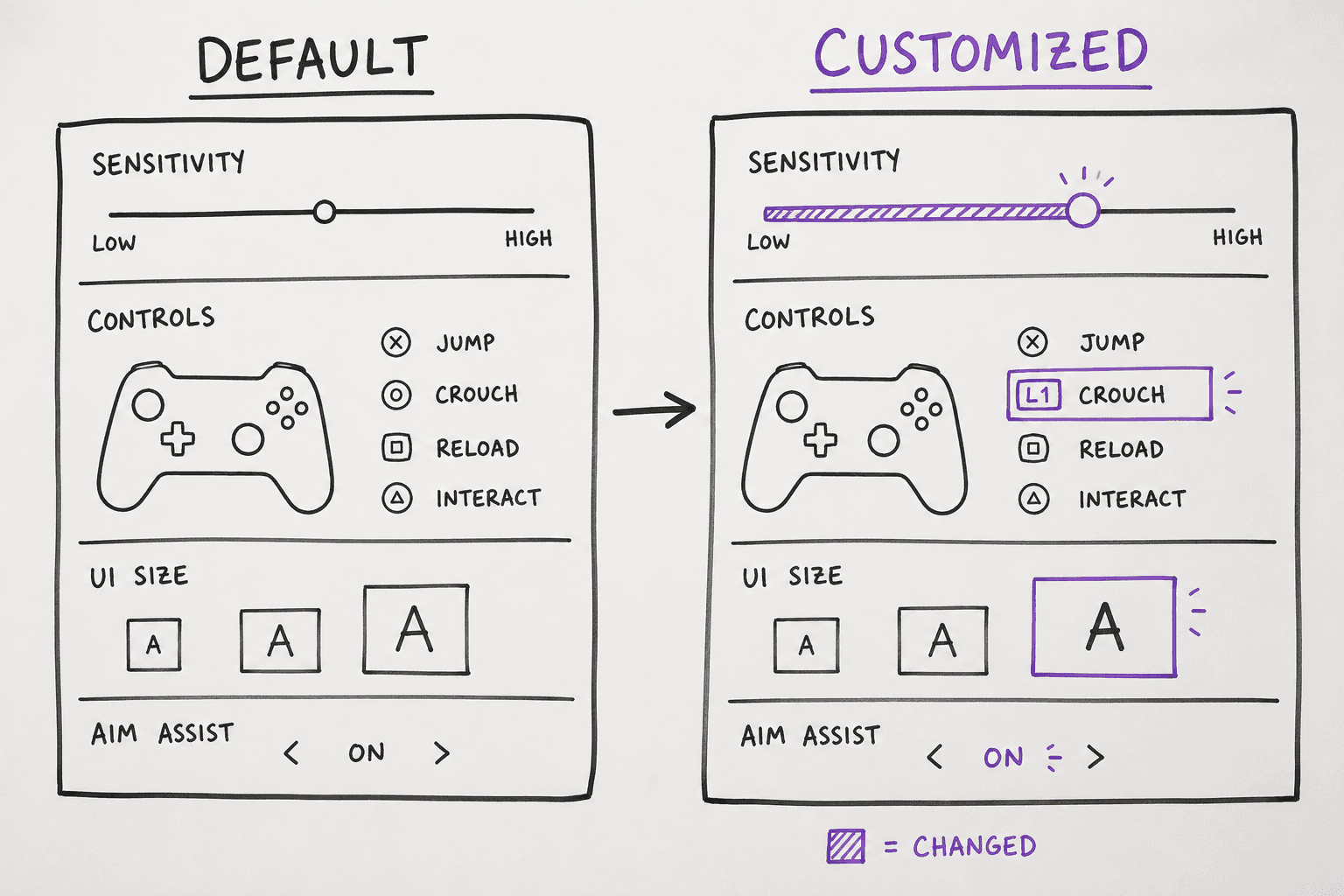
2. For everyone else, it's about the game fitting their body and their comfort, not about winning
Separate from competitive motivation, most players adjusted settings simply to reduce friction and to make the game feel like it fit them physically or reduce things that bothered them, with no real bearing on outcome.
"...because my hand is smaller than some men so I had to make some changes in the settings, I need to find another way to use it." P9
"I make these changes so that I can play better. And they're basically very subjective to me and how I want to play the game… and so I can see better or I can navigate better. It doesn't really affect the tasks that we have to do in the game. It's just to make me comfortable while playing the game." P6
Contrast adjustments, reduced controller opacity to cut visual distraction, and dominant-hand remapping all fell into this same bucket: not performance, just fit.
3. The same setting that helps one player can hurt another
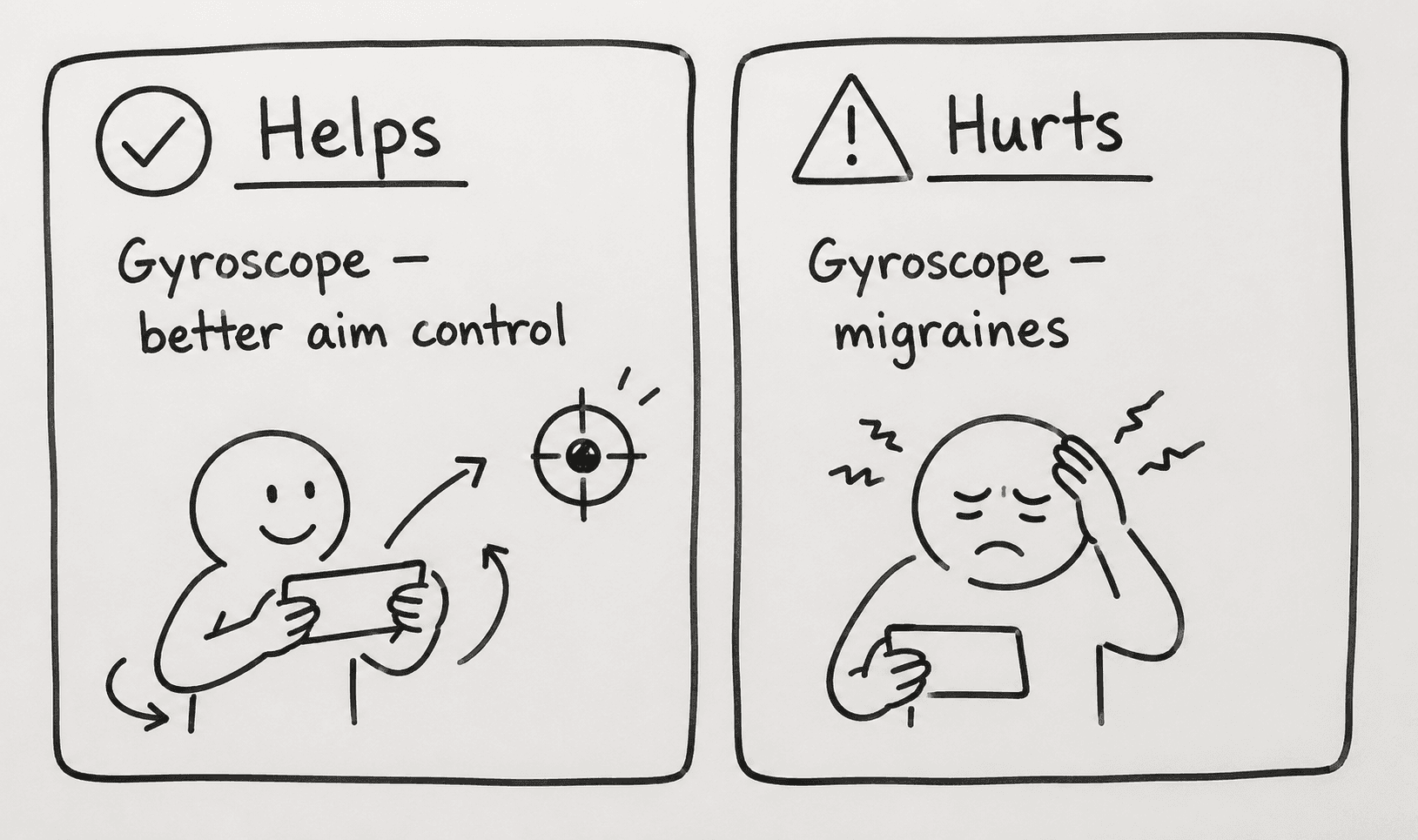
Accessibility settings weren't universally positive. Several participants described real adverse effects when a setting didn't match how they actually played.
"I have tried using a gyroscope because that really helps in aim, shake or recoil control but I can't do that because of my migraine issues." P2
"So I would think that it is a good addition where they can remove screen shake from the game. So it doesn't cause nausea or dizziness." P5
This pushed me toward a conclusion I hadn't expected going in: "accessible" isn't a fixed target you hit once. It's a moving negotiation, different for every player, and sometimes the same feature that unlocks better play for one person makes another person sick.
4. Nobody found these settings inside the game
Across nearly every interview, the same pattern showed up: players didn't discover accessibility settings through the game itself. They found them on TikTok and YouTube, through friends who played competitively, or through pure trial and error.
"So it was difficult to adjust. I had to go through a series of TikTok videos, YouTube videos just to tweak the right setting in order to play better…some videos actually made it clear that there are some things you can tweak that make you a better player." P8
"Well, actually, my friend who was playing PubG because my first game was PubG, and he was playing it professionally. And he taught me how to do it. And he gave me some tips and tricks." P1
"…And then later when I started kind of tampering with these things, I realised I can change motion sensitivity and all of that. So then I started doing that to kind of make my gameplay more comfortable." P4
The features exist. The discovery layer around them doesn't.
What This Means for Developers
So What?
Make accessibility settings discoverable inside the game. Right now, players are outsourcing discovery to social media and word of mouth. An in-game prompt the moment a relevant feature becomes usable like written in plain language would close that gap directly.
Reframe accessibility as optimization. Competitive players actively resist "default" as a constraint, not an offering. Framing customization as "tune your setup" rather than "accessibility options" may drive far higher adoption without any change to the underlying feature.
Let settings be adjustable mid-session, not buried in a menu that breaks flow. Since effects are subjective and sometimes adverse, players need to be able to react and adjust quickly, not exit gameplay to fix a mistake.
Reflections
Nice-to-haves become need-to-haves
Going in, I expected to find that non-disabled players used accessibility settings almost incidentally nice-to-haves, not need-to-haves. What I found instead was more interesting: these settings function as a kind of hidden infrastructure for comfort and competitive edge alike, used deliberately and often expertly, but almost entirely undiscovered through the game itself.
The clearest throughline across every interview was this: accessibility, for these players, was never about disability. It was about control
over comfort
over performance
over how much friction they were willing to tolerate before a game stopped being fun.
That reframes the entire design question. It's not "how do we help players who need this." It's "how do we let every player find and shape the game around themselves".
There's a lot more behind this than a scroll can hold. If you want the deeper cut, I'm one email away.
ux.megha@gmail.com